

Beth Newhart
Reporter, Technology and Mind & Behavior
@bethbylinesBeth Newhart, based in Chicago, covers Mind & Behavior and Technology for The Academics Times. Beth is a journalist with experience covering culture, business, tech, finance, food, beverage and more. Her work has been featured in international publications, including BeverageDaily, DairyReporter, Crain Communications and Time Out Group. She has a bachelor's degree in journalism from Loyola University Chicago.
 Compared with white women, the psychological distress incurred from having breast cancer disproportionately affects Black women who are considered early survivors of the disease, according to new research from The Ohio State University that is the first to compare distress-related trajectories across these groups from diagnosis to early survivorship. If this disparity is left unaddressed, Black female cancer survivors could experience worsening physical health and quality of life over the course of their recovery, the authors suggest.
 A novel approach to monitoring sleep with remote sensing and radar signals that uses a new active motion suppression technique to address an artifact from breathing motion has been invented by researchers from Arizona State University, potentially providing an alternative to both high-tech wearable devices and the sensors used in clinical sleep studies.
 Girls are more likely than boys to be bullied by their peers, and they may be disproportionately turning to illicit substances such as alcohol and marijuana as a result, according to a new analysis of data from 2011 through 2017, obtained through the national Youth Risk Behavior Survey, which collects demographic and health behavior information from U.S. high school students.
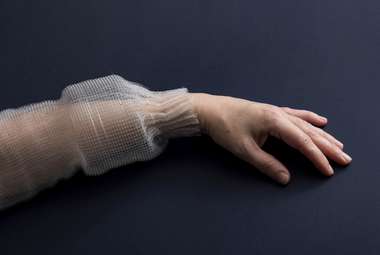 Researchers from the Massachusetts Institute of Technology have designed the world's first fiber with digital capabilities that can be incorporated into fabric. Capable of storing music, videos or other files in clothing, the thread can also collect physiological data from the wearer in order to analyze and predict their activity, potentially revolutionizing the personal health technology industry.
 Through electrical measurements of the skin and three key facial muscles, researchers in Portugal have shown that we respond differently to different strong emotions expressed by laughing or crying — and the results suggest that our bodies can distinguish fake laughter, but not fake tears, from real emotions.
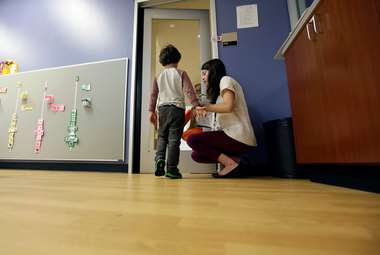 Children with autism spectrum disorder, a developmental disability that involves deficits in social communication and interaction, are more likely to be killed by their parents than by any other group of adults, and most often in response to the stress of having to care for the child, according to a recent analysis of 706 news media articles on homicide incidents involving autistic child victims in the United States.
 Low earth orbit, the area of space where many of our newest, fastest artificial satellites are being deployed, is full of floating trash that cannot reliably be collected, threatening the safety of artificial satellites and the International Space Station. But now a group of researchers have proposed a system that minimizes the challenges of operating robots in space, making it easier for robotic arms attached to spacecraft to collect debris and declutter the cosmos.
 A new disposable device can identify common allergens in food and drinks, such as egg proteins in wine, using immunosensors to detect biomarkers in even ultra-low quantities. Quicker, easier to use and less expensive to manufacture than commercial alternatives, the innovation could also potentially be adapted to detect biomarkers in other substances, including blood, urine and saliva.
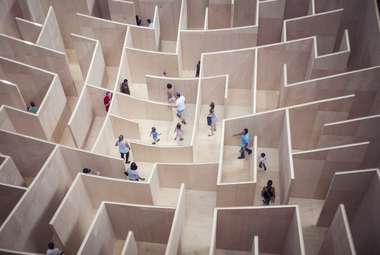 New research from an international team of neuroscientists has provided some of the first reliable evidence that a connection between replay, or mental simulation, and indirect learning exists in humans, illuminating a process that may help us consider the relationship between actions and outcomes and make effective decisions.
 For thousands of years, humans have built seawalls, laid down rubble, and created other barriers between water and land. New research on both natural and artificial coastlines in Wales has shown that such barriers can be up to 50% less complex than natural landscapes, potentially imperiling the biodiversity enabled by more structurally complex environments.
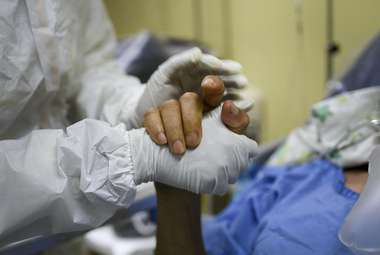 People with life-threatening conditions and diseases significantly benefit from social support interventions that promote healthy behaviors and may even gain longer life spans as a result, according to a new meta-analysis of health care studies dating back to 1980.
 Heightened symptoms of depression and anxiety were common during the early weeks and months of the COVID-19-related quarantine orders last spring, and now, British behavioral scientists have found that these symptoms decreased quickly when people used socially supportive coping strategies, which involve turning to family and friends for emotional support, instrumental support — which offers help in a tangible or physical way — and venting.