

Nick Gallagher
Reporter, Mind & Behavior and Technology
@_nick_gallagherNick Gallagher, based in Brooklyn, New York, covers Mind & Behavior and Technology for The Academic Times. Prior to that, Nick wrote articles for the Brooklyn Eagle, Brooklyn Magazine and Popula, among other outlets. He is a graduate of the Newmark Graduate School of Journalism at CUNY.
 Wiki sites and other contributor-based web pages may see reduced user participation after introducing automated bots into their workflow, according to a new paper by Virginia Commonwealth University researchers — apparently the first study that has used rigorous econometric methods to track the connections between bot implementation and subsequent user activity.
 After studying a nationally representative dataset of more than 10,000 households, University of Chile researchers have identified a link between increased household density and symptoms of depression in Latin America.
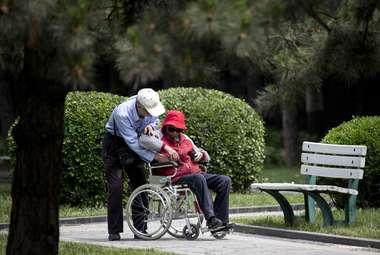 Researchers have found that caregiving for a spouse who has a disability — an activity long thought to contribute to depression — may instead benefit a caregiver's mental health in the context of spousal activity limitations, because acts of caregiving may provide an opportunity for physical activity and a sense of purpose.
 Researchers from Duke University's Marine Lab have developed an approach combining neural networks and drones that can locate and count hundreds of thousands of seabirds, helping conservationists obtain a more comprehensive view of how climate change and other dynamics have affected wildlife populations.
 Customers may be less likely to buy certain items when a salesperson has been in close physical proximity to them, as they prefer to keep their distance during interactions with sales associates, according to a recent study involving more than 1,200 participants — the first to show a connection between salesperson proximity and consumer purchasing in a real-world retail setting.
 Children who are more emotionally sensitive may be more responsive to both supportive and adverse caregiving experiences, as measured in the amygdala, a brain region involved in responding to stress and regulating emotions.
 People who report feeling a stronger sense of empathy toward a person they have victimized may be capable of higher-quality apologies, supporting the idea that interpersonal empathy-building techniques could help preserve and repair relationships.
 In what they describe as the first study to detail a deep learning model for emergency call classification, Spanish researchers have developed a series of neural networks that could one day be used to more efficiently label and categorize emergency calls, potentially leading to faster response times for people suffering through severe medical emergencies.
 Scientists from Harvard University and the Massachusetts Institute of Technology have proposed a new, electrochemical system for diagnosing diseases based on the detection of nucleic acids from DNA or RNA. Their platform could one day offer a faster and more accurate method to identify viruses, bacteria, and other pathogens ranging from the coronavirus to the bacterium that leads to Lyme disease.
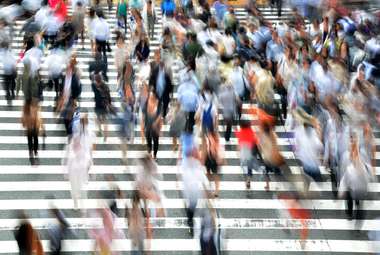 Over years, months and days, city dwellers around the world move similarly: Through a massive, multi-institutional project involving millions of people and billions of data points, an international team of researchers have formulated an equation that is capable of tracking large-scale population mobility in cities from different cultures around the world.
 Religious people may benefit from taking placebo medicines or interventions that claim to provide healing via spiritual or supernatural means, according to the first research showing that placebos could lead to significant brain responses as well as positive subjective experiences in the context of religious belief.
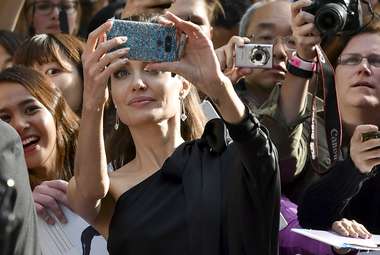 In a first-of-its-kind study, German researchers used an electroencephalogram to track how the brain reacts to others’ faces as they are exposed to them in different ways over time, finding more pronounced neural reactions corresponding to familiarity when people viewed the faces of individuals they had met in person than when they viewed faces they had indirectly observed in the media or in static images.